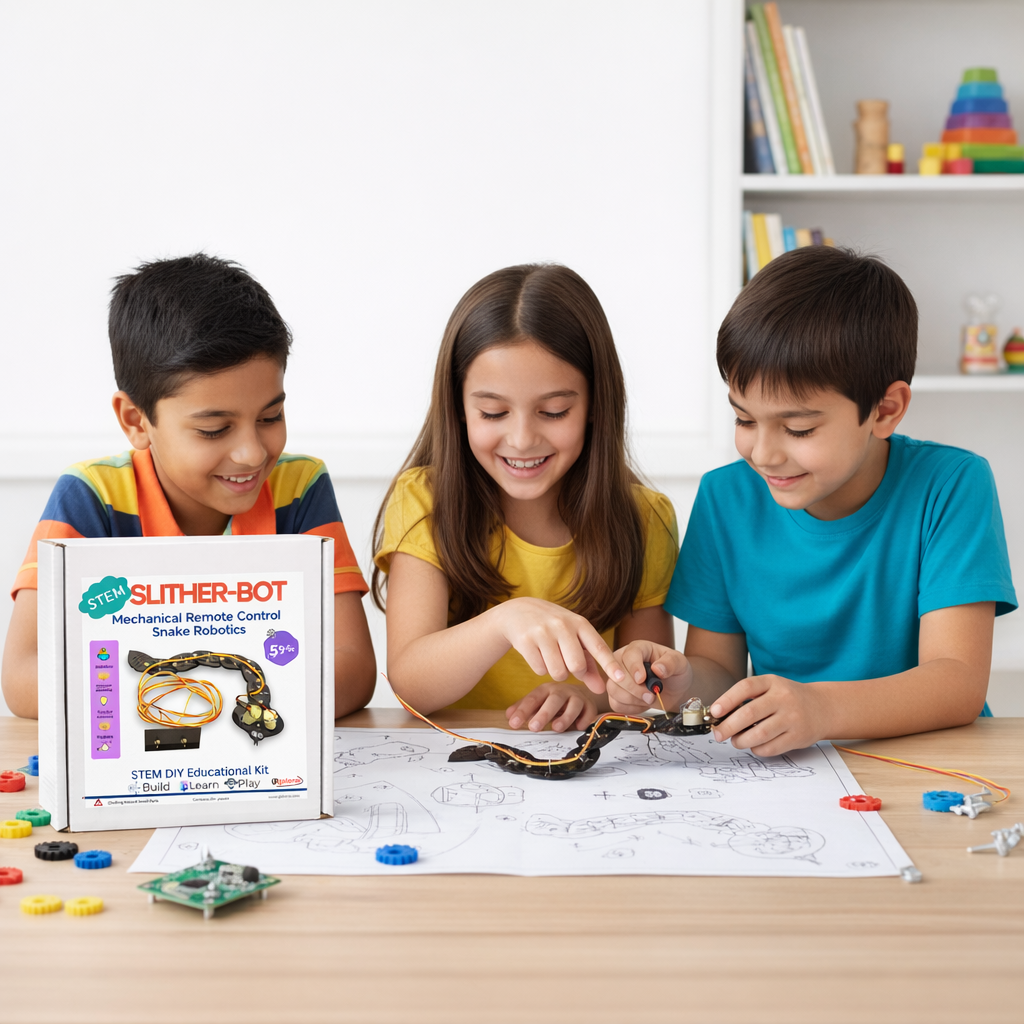
Slither-Bot: The Ultimate DIY Kinetic Snake
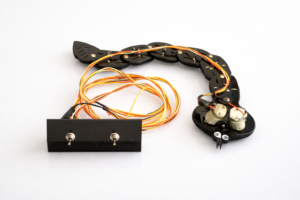
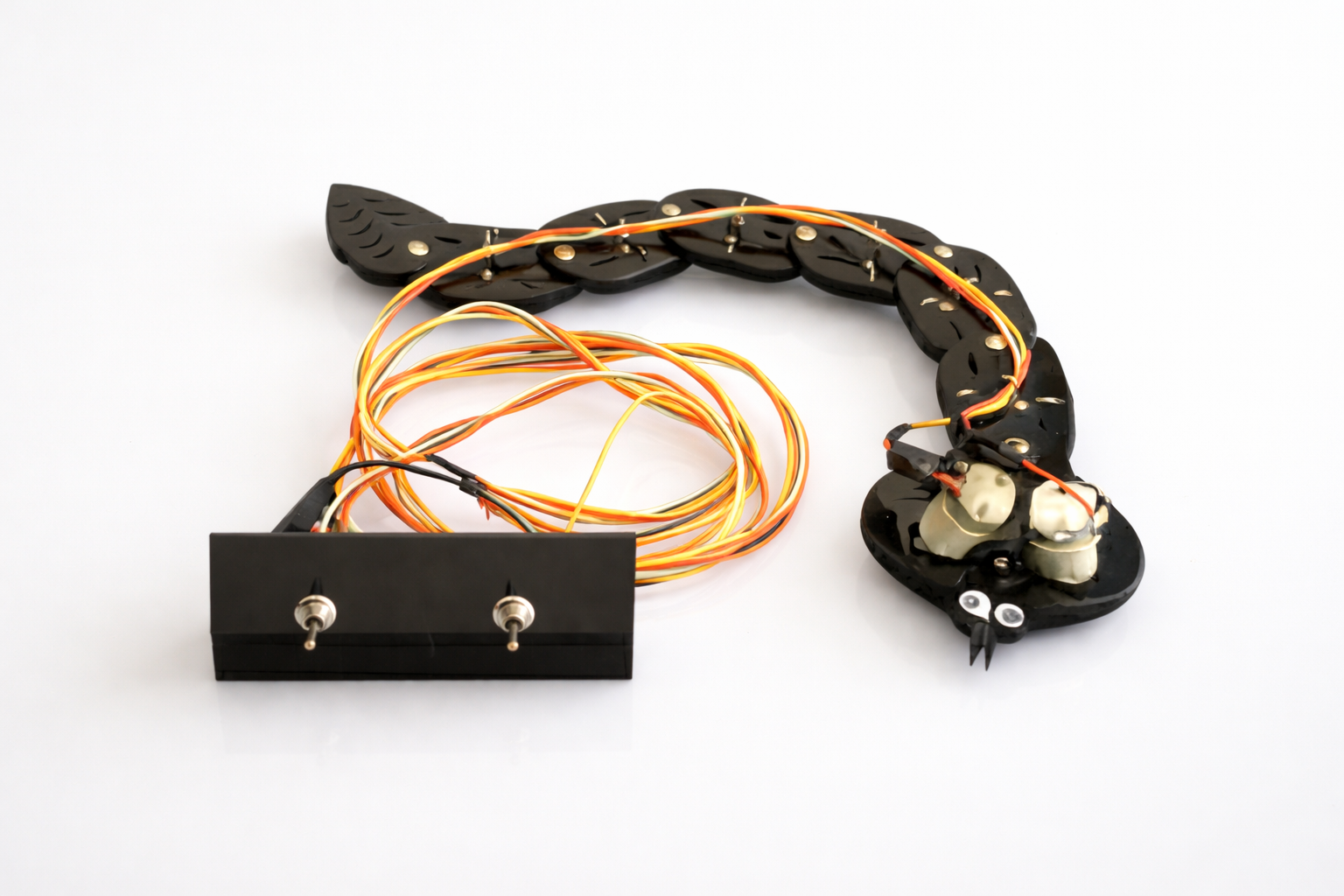
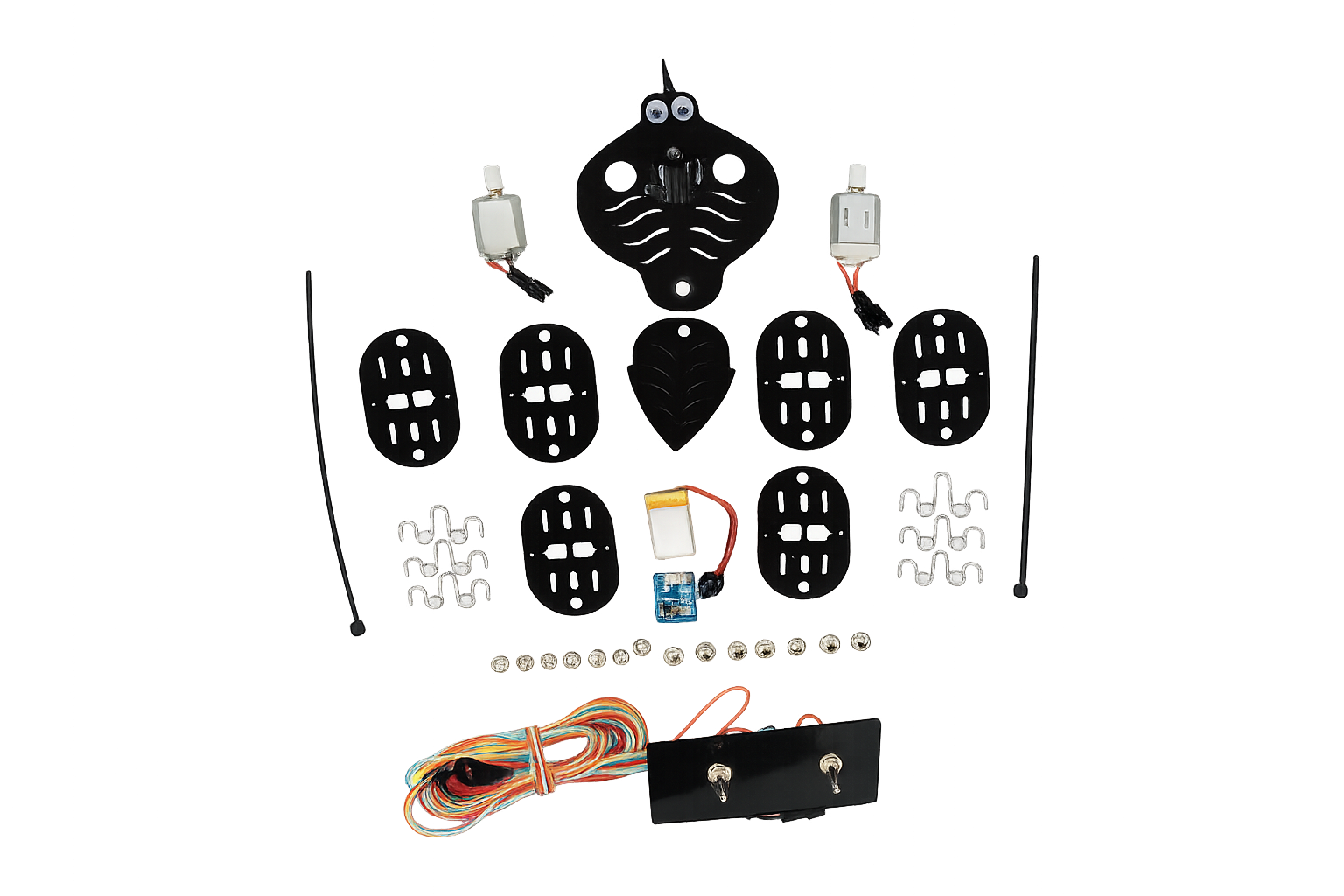
Bring engineering to life with the Slither-Bot, a fascinating STEM kit that explores the mechanics of reptilian movement. This robot uses a high-torque dual-motor system and precision-engineered plastic segments to mimic the realistic slithering motion of a snake.
By assembling the interlocking body parts, builders learn first-hand how rotational energy is converted into a rhythmic, dragging “slither” against surfaces. Controlled by a custom-designed, flat-profile remote, it’s the perfect blend of robotics and hands-on fun for aspiring engineers.
-
Realistic Motion: Mechanical slithering action using friction-based movement.
-
STEM Learning: Teaches principles of linkages, motor torque, and kinetic energy.
-
Premium Build: Crafted from sleek black acrylic pieces.
-
Interactive Play: Includes a DIY remote control for real-time navigation.
Learning Outcomes:
This DIY snake robot is a goldmine for STEM (Science, Technology, Engineering, and Math) education. Because it lacks wheels or legs, it forces students to think about physics in a very “hands-on” way.
Here are the key learning outcomes educators and parents can focus on:
1. Physics: Friction and Locomotion
The biggest “aha!” moment with this robot is understanding how it moves without wheels.
Static vs. Kinetic Friction: Students learn how the plastic parts must “grip” the surface to push the body forward.
Newton’s Third Law: For every action, there is an equal and opposite reaction. The snake pushes against the floor, and the floor pushes the snake forward.
Weight Distribution: Students can experiment with how adding weight to certain segments affects the robot’s ability to “bite” into the surface and move.
2. Mechanical Engineering: Linkages & Joints
By assembling the laser-cut pieces, students explore the “skeleton” of robotics.
Degrees of Freedom: They learn how many joints are needed to create a fluid, organic movement.
Rotary to Linear Motion: The motors spin (rotary), but the body moves forward in a line (linear). Understanding this conversion is fundamental to all mechanical design.
Structural Integrity: Learning how to fasten acrylic pieces so they are tight enough to hold together but loose enough to pivot.
3. Electronics & Circuitry
This kit provides a clear, visible look at how power moves.
DC Motor Fundamentals: Understanding how electricity creates a magnetic field to spin a shaft.
Switch Logic: Using the flat remote to understand “open” and “closed” circuits (Completing the circuit to make the snake move).
Wire Management: A practical lesson in routing wires so they don’t get tangled in the moving joints.
4. Biology (Biomimicry)
This is a perfect example of Biomimicry—designing robots based on nature.
Animal Adaptation: Discuss why a snake evolved to move this way (to fit in tight spaces or move over uneven terrain).
Bio-inspired Design: Encourages students to look at other animals (like caterpillars or fish) and imagine how a robot could mimic them.
5. Critical Thinking & Troubleshooting
Encouraging students to adjust the remote or the tightness of the joints to improve speed.